First Aid in Ä¢¹½¶ÌÊÓƵ Premises
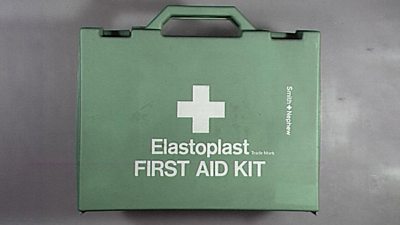
This page describes how first aid is arranged in Ä¢¹½¶ÌÊÓƵ premises. It supplements the guidance to first aid on productions. It is aimed at people who need to decide what provision to make for first aid on Ä¢¹½¶ÌÊÓƵ premises. It also provides the arrangements and numbers for contacting ambulances and the National Central Control Room (NCCR).
What can go Wrong
- Casualties do not receive first aid
- Injury does not get treated and may get worse
- Failure to comply with legislation
Legal / Ä¢¹½¶ÌÊÓƵ Requirements
- UK law requires employers to assess first aid needs and make provision for first aid to be provided.
- Ä¢¹½¶ÌÊÓƵ Managers must ensure they have appointed sufficient first aiders for their areas of activity, these appointed first aiders will have a ratio of 1 First Aider to 25 staff, however in the hybrid way of working there are additional HSE COVID protocols that confirm that members of staff who are vulnerable should not be requested to be first aiders.
- Ä¢¹½¶ÌÊÓƵ management will communicate the request for volunteers and procedures for first aid provision to staff in meetings or other chosen process.
- Managers must ensure that their teams are aware and updated on the First Aid arrangements for their workplace.
- HSE COVID protocols for additional PPE have been added to the new updated procedures for first aid provision.
Emergency Procedure
If someone requires first aid:
- In a Ä¢¹½¶ÌÊÓƵ Tier 1 building: Security will act as first responders for First Aid. Ä¢¹½¶ÌÊÓƵ Staff trained in First Aid will operate as a secondary response should Security be unavailable.
- In buildings such as TV/radio stations where there is no security presence, local arrangements will remain in place for first aid to be given by approved staff First Aiders.
- In Ä¢¹½¶ÌÊÓƵ buildings where Security are the first aid responders, posters will be available showing details of how to contact Security to obtain assistance.
- Lists with names and numbers of staff who are First Aiders will be displayed in communal areas of buildings whether Tier 1 or other Radio/TV stations.
- Additional PPE has been added to first aid boxes and defibrillators in line with the HSE COVID protocols to ensure that staff attending a first aid call are properly protected.
- If you cannot find a First Aider quickly, contact the National Central Control Room (NCCR) on 0207 765 1666 , who should be able to assist.
If you think an ambulance is required:
- Security will call an ambulance in buildings where Security are the first aid providers.
- In local buildings/stations the First Aider will call an ambulance by dialling 999 and will inform Reception that this has been done so Reception can instruct the ambulance crew when they arrive and direct them to the correct location as appropriate.
- If your building has a local arrangements, or if you cannot contact the National Central Control Room (NCCR) then call 999 from a mobile. Ensure that you provide the correct address of the building and where the casualty is located. Then contact the local Facilities Managers, and/or Reception to inform them of the situation.
- Stay with the casualty until help arrives.
Control Measures:
- In a Ä¢¹½¶ÌÊÓƵ Tier 1 building: Security will act as first responders for First Aid. Ä¢¹½¶ÌÊÓƵ Staff trained in First Aid will operate as a secondary response should Security be unavailable.
- In buildings where there is no Security presence, the provision of First Aid response will be delivered by trained Ä¢¹½¶ÌÊÓƵ Staff.
- Team Managers will request that staff volunteer to be First Aiders in order to retain a constant flow of First Aiders with the caveat that vulnerable staff do not have to volunteer to become First Aiders.
- The First Aiders ratio is about 1 First Aider to 25 staff members although this will vary in Production and in Audiences.
- Management should take account of work which occurs outside normal office hours and ensure that there are enough First Aiders to cover shift working patterns and that staff know how to find a First Aider in their office or via Facilities Managers.
- Lists with names and numbers of staff who are First Aiders will be displayed in communal areas of buildings whether Tier 1 or other Radio/TV stations.
- First aid training is provided by Ä¢¹½¶ÌÊÓƵ Academy and contact the Academy for details. Team managers will provide the Academy with names of staff who volunteer to be First Aiders. Once the appropriate training is complete the Academy will provide details of first aid-trained individuals to Workplace who will keep the posters and other lists updated.
- First aid rooms are provided in some of the larger Ä¢¹½¶ÌÊÓƵ buildings. Rooms or areas where first aid treatment may be given when privacy is required should be identified.
- Automatic External Defibrillators (AED) are provided in the receptions of most staffed Ä¢¹½¶ÌÊÓƵ buildings. Some buildings have more than one device and the secondary devices can be found in communal areas. Ä¢¹½¶ÌÊÓƵ Academy have developed a video showing how these should be used.
- First Aid kits are provided in Ä¢¹½¶ÌÊÓƵ buildings by Facilities Management teams and are located in shared areas.
- First aiders are trained - at Ä¢¹½¶ÌÊÓƵ buildings the minimum standard of First Aid training is the one day ‘First Aid in the Office or Studio’ course.
- Most Ä¢¹½¶ÌÊÓƵ buildings are within easy reach of ambulance services and hospital A&E departments.
- Ä¢¹½¶ÌÊÓƵ Workplace are responsible for the maintenance of first aid boxes, defibrillators and the replenishment of these kits.
- Ä¢¹½¶ÌÊÓƵ Workplace also manage the Needs Assessments for all Ä¢¹½¶ÌÊÓƵ Buildings.
Division Specific Issues
- Ä¢¹½¶ÌÊÓƵ Academy arranges training on request and maintains records of training and will regularly issue the names of trained First Aiders to Facilities Managers.
- Facilities Managers will update local notices with names of First Aiders these details will be provided by local stations once the training has been completed.
- Ä¢¹½¶ÌÊÓƵ Safety monitors the wider picture by reviewing accident reports. If there are delays in providing First Aid, Ä¢¹½¶ÌÊÓƵ Safety will review the guidance and contact local managers, and Security where appropriate. Ä¢¹½¶ÌÊÓƵ Safety will also review Needs Assessments for first aid provision ensuring they are current and reviewed as necessary.
- Ä¢¹½¶ÌÊÓƵ Safety must be contacted if any of the above control measures are not achievable to further review the processes.
- Production: It will be the responsibility of the Producer to ensure that appropriate first aid cover is available on production.
- Events: It will be the responsibility of the event organiser to ensure that the appropriate level of first aid cover is available.
- Local stations will ensure that first aid boxes and defibs are available for their vehicles and will include the appropriate PPE.
- Ä¢¹½¶ÌÊÓƵ Academy will provide additional training as appropriate outside of the 1 day basic first aid training or the 3 day training as required.
Useful Documents
-
Updated July 2021
Recommended links
-
-
This will also take you to the HSE COVID page
Premises and sets topics
-

Sets & Premises safety guide
This Safety Guide collates those of our Safety Guidelines relating to construction activities (on sets or other structures, including under 'CDM') and to the occupation / use of building premises (studios or locations). -
 This site is for Ä¢¹½¶ÌÊÓƵ Employees or potential future employees only. If you are not a Ä¢¹½¶ÌÊÓƵ employee or looking for further information regarding Ä¢¹½¶ÌÊÓƵ Access Services then please click on another page from the menu above, where you can find out more about Remploy.
 -
Asbestos Management on location
This is a summary of the way that asbestos is managed on location. It supplements the information about managing asbestos on Ä¢¹½¶ÌÊÓƵ Premises. -

CDM Overview
Legislation to ensure the safe design and construction of structures was updated in April 2015, namely the Construction (Design and Management) Regulations 2015 (CDM 2015) -
CDM 2015 - The Ä¢¹½¶ÌÊÓƵ Approach
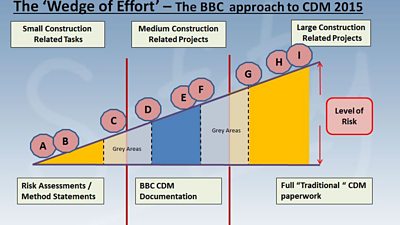
Guidance on the practical application of the Construction (Design and Management) Regulations 2015 across the Ä¢¹½¶ÌÊÓƵ -
 This page describes how first aid is arranged in Ä¢¹½¶ÌÊÓƵ premises. It supplements the guidance to first aid on productions. It is aimed at people who need to decide what provision to make for first aid on Ä¢¹½¶ÌÊÓƵ premises. It also provides the arrangements and numbers for contacting ambulances and the National Central Control Room (NCCR).
 -
Legionella in Premises: Control of
This guidance provides an overview of how water systems are managed in premises to minimise the risks from the Legionella bacteria. -
Permit to Work in Ä¢¹½¶ÌÊÓƵ Buildings (Restricted Work)
Some work in Ä¢¹½¶ÌÊÓƵ buildings is restricted and you have to get permission, called a Permit To Work (PtW) to do it. -
Pressure Systems
A guide to pressure systems in buildings. Pressure Systems include all plant/systems that contain a ‘relevant fluid’, defined as steam or gas under pressure and liquids under pressure which become gases upon release to the atmosphere, at a pressure greater than 0.5 bar (about 7psi) above atmospheric (except for steam). Around the Ä¢¹½¶ÌÊÓƵ there are heating, fuel transfer, compressed gas and hydraulic systems used in program production, studios (e.g. Camera Peds), office and maintenance facilities. -
Sets: Safety of
This Safety Guideline is concerned with the construction and use of production sets and associated scenery used in studios and on locations.
More from SSR
-
Your platform to record accidents, risk assessments, assurance monitoring and inspections
-
(Internal Only)
-
Ä¢¹½¶ÌÊÓƵ Safety Guidelines
An A-Z of Ä¢¹½¶ÌÊÓƵ's Safety Guidelines -
Safety Advice Line: 0370 411 0464 Email: safety@bbc.co.uk
- A-Z of Ä¢¹½¶ÌÊÓƵ Safety Guidelines
- Accident Reporting and Investigation
- Ä¢¹½¶ÌÊÓƵ Health & Safety Policy
- Contractors (incl. vetted lists)
- Contributors
- Fire Safety
- Freelancers
- Independent Production Companies
- Risk Assessment
- Safety Alerts
- Safety Responsibilities
- Safety Training
- Sets & Premises Safety Guide
Events guidance - key links:
- Exhibitions
- General Guidance
- Indoor Location Recce Checklist
- Outdoor Location Recce Checklist
- Major Incidents & Emergency Planning
- Marketing and Promotional
- Noise Exposure
- Planning and Management
- Responsibilities
- Responsibilities Form
- Laser Lighting Effects
- Strobe Lighting
- Temporary Stages and Rostra
Health topics - key links:
- (Ä¢¹½¶ÌÊÓƵ network only)
- Contributors Fitness to Participate
- Display Screen Equipment (DSE)
- (Ä¢¹½¶ÌÊÓƵ network only)
- First Aid and Welfare on Location
- International Travel - Risks & Health
- Manual Handling
- Mental Health: Ä¢¹½¶ÌÊÓƵpage
- (Ä¢¹½¶ÌÊÓƵ network only)
- Personal Health and Wellbeing
- Pregnancy
- (Internal Only)
- Tiredness and Fatigue
- Travel Health Contacts
Ä¢¹½¶ÌÊÓƵ High Risk:
- High Risk Guide (HRG)
- (Internal Only)
- Covert Filming
- Crisis Management and Security Support
- Door Stepping
- (Ä¢¹½¶ÌÊÓƵ network only)
- (Ä¢¹½¶ÌÊÓƵ network only)
Ä¢¹½¶ÌÊÓƵ Journalism - key links:
- Broadcast Vehicles
- Courts of Law
- Covert Filming (via Security on Location)
- COVID: Managing COVID risks is News Deployments
- Demonstrations, Protests and Crowds (via Security on Location)
- Door Stepping (via Security on Location)
- Press Conferences
Ä¢¹½¶ÌÊÓƵ Productions - key links:
- Aerial Filming and Airfields
- Animals: Displaying and handling for performance
- Boats: Working on
- Children and Young People
- Driving
- Electrical Equipment and Systems
- First Aid and Welfare on Location
- Food Safety (Cooking and Catering)
- Remote Location Working
- Roads and Streets: Working by
- Security of Productions on Location
- Stunts
- Tiredness and Fatigue
- Unmanned Aerial Systems (UAS aka Drones)
- Vehicles: Recording in, from and around
- Working at Height: Mobile Elevating Work Platforms
- Working at Height: Tower Scaffolds
Ä¢¹½¶ÌÊÓƵ Radio - key links:
- (Ä¢¹½¶ÌÊÓƵ Network only)
Ä¢¹½¶ÌÊÓƵ Security - key links:
Ä¢¹½¶ÌÊÓƵ Sport - key links:
About this site
This site describes what the Ä¢¹½¶ÌÊÓƵ does in relation to managing its health, safety and security risks and is intended for those who work directly for the Ä¢¹½¶ÌÊÓƵ.
It is not intended to provide instruction or guidance on how third parties should manage their risks. The Ä¢¹½¶ÌÊÓƵ cannot be held liable for how this information is interpreted or used by third parties, nor provide any assurance that adopting it would provide any measure of legal compliance. More information
Some links on this site are only accessible when connected to the Ä¢¹½¶ÌÊÓƵ network