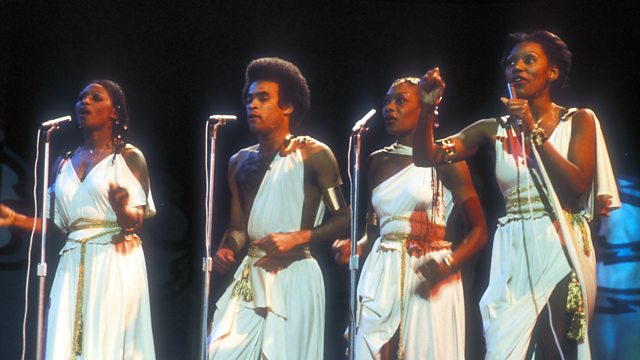
Rasputin by Boney M
Why a disco song about a Russian priest still brings joy today.
Rasputin was a massive disco hit for the British-German Caribbean group Boney M in 1978. Nearly fifty years later it remains a much loved symbol of happiness and freedom for a a truly global audience. This edition of Soul Music features stories from Iran, Cameroon, India and of course Russia.
Anahita Tishtar says Rasputin is a song that represents a golden age in Iran before the Islamic Revolution restricted Western music. It reminds subsequent generations of happier times when people were free to dance.
Famil Ismailov recollects his wild dancing in the style of Bobby Farrell at teenage discos in the former Soviet Union. Boney M was one of the first Western music acts allowed in Russia.
Eric Ngalle Charles heard the song on his sisters' cassette player as a small child in Cameroon. The song became significant to him a decade later when he was trafficked to Russia and ended up dancing on stage with Boney M at one of their many Russian concerts.
Sweta Amit danced to it as toddler at her parents' dinner parties in Thailand. As a child from a conservative Indian family the song represents freedom and a way to banish stress.
Rasputin on the violin and cello: the Scottish-Egyptian classical duo The Ayoub Sisters first heard it as children in the back of their surgeon father's car as he drove to the hospital to do his ward rounds. Later on they released a classical version of it.
The original lead singer of Boney M Liz Mitchell says Rasputin has a sound and rhythm that incorporates so many different styles of music that people all around the world can identify with, and that it just makes people feel free and happy.
Producer: Maggie Ayre
On radio

Broadcasts
- Sat 15 Aug 2026 10:30蘑菇短视频 Radio 4
- Mon 17 Aug 2026 16:30蘑菇短视频 Radio 4
Why Sam Cooke's 'A Change Is Gonna Come' became a Civil Rights anthem
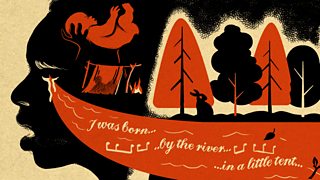
Watch the animation - Professor Mary King describes how the song became a symbol of hope.
Podcast
-
![]()
Soul Music
Series about pieces of music with a powerful emotional impact.