From The Strokes to Aaliyah: 15 albums that define 2001
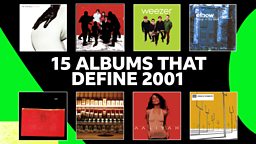
This year marks 25 years since The Strokes released Is This It - the scuzzy, sardonic debut from the New York band that kickstarted a scene and gave the noughties an era-defining sound.
To celebrate, 6 Music is celebrating the seminal record with A Deep Dive Into Is This It, telling the story behind the album and the band's early formation - listen to it now on 蘑菇短视频 Sounds.
On Wednesday 29 July, we also marked the occasion with wall-to-wall music from 2001 to reflect the era, playing Is This It in full across the day, alongside archive and specially recorded voice notes from artists and creatives close to The Strokes. Listen back on 蘑菇短视频 Sounds.
But The Strokes weren't the only group having a monumental year in 2001. No, it was also the year that gave us a dance classic from Daft Punk, an influential LP from Aaliyah, a game-changing debut from Gorillaz, plus many more timeless records.
Below, we look back at 15 of the most defining albums of 2001, all turning 25 this year.
-
![]()
6 Music's Deep Dive into The Strokes' Is This It
Celebrating the American rock band on the 25th anniversary of their debut album.
-
![]()
6 Music Artist Collection: The Strokes
Live sessions, classic interviews and more from The Strokes' archive.
-
![]()
Listen to 6 Music Indie Forever
The biggest and best indie pop, rock and classic tunes 24/7.
The Strokes - Is This It
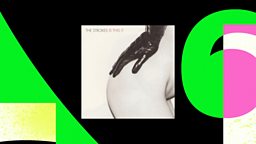
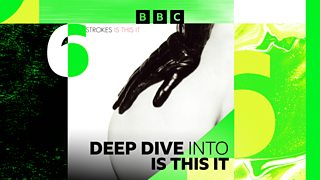
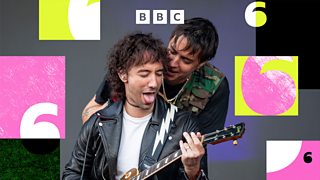
Perhaps the biggest catalyst for post-millennium indie entering the mainstream, New York's garage-rock revivalists The Strokes announced themselves in explosive fashion with debut album Is This It in July 2001. The scrappy band, who'd formed around a teenage friendship between guitarist Albert Hammond Jr. and frontman Julian Casablancas, found fame fast - within a year they'd gone from playing to a handful of friends in a rammed tent to gracing the Main Stage at Reading and Leeds.
Soon, they were the epitome of cool and much of their scuzzy coolness came from a deliberate resistance to studio polish. Producer Gordon Raphael recorded the album "with one microphone for the voice and one for the snare drum: everything minimal", a rawness that very much suited Casablancas' sardonic drawl, delivered as though crooning down a phone line rather than into a mic. Fittingly, Casablancas later that he wanted his voice to sound "like your favourite blue jeans - not totally destroyed, but worn-in, comfortable".
Ever a band to court a bit of controversy, American retailers refused to stock the record over its now-iconic artwork, though it did little to dent the album's success, which went on to sell over a million copies in the US by 2006. It's arguable that no other record did more to lead the guitar revival that would define the indie scene for much of the next decade. The album's influence can be seen in the likes of Fontaines D.C., Wet Leg and even Arctic Monkeys, who opened their 2018 song Star Treatment with the lyric: "I just wanted to be one of the Strokes, now look at the mess you made me make".
Daft Punk - Discovery
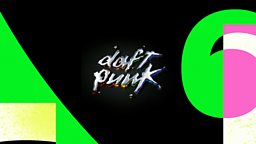
By 2001, Daft Punk were already one of dance music's most exciting names. Their 1997 debut 蘑菇短视频work turned them from bedroom producers into house music frontrunners, with singles Da Funk and Around the World both reaching the Top 10 in the UK and their native France.
Discovery, though, was a record that took things to another level. It stuck to their dancefloor roots but also offered up something far more expansive. While 蘑菇短视频work had largely been built alone in member Thomas Bangalter's bedroom, a record steeped in Chicago house, its follow-up was a glossy collision of influences ranging from disco, electro, R&B, prog and soft rock, stitched together from samples of everyone from Barry Manilow to obscure jazz keyboardist Edwin Birdsong. Bangalter explained to Remix magazine at the time that the shift was a conscious effort to bring together "all the elements of music that we liked as children".
It was also the record that introduced the world to Daft Punk's now-iconic robot, helmeted alter-egos. Soon, Daft Punk became one of the biggest electronic acts in the world, and the influence of this record grew and grew. The album inspired everyone from Skrillex and Justice to Pharrell Williams and Kanye West, the latter sampling Harder, Better, Faster, Stronger for his 2007 hit Stronger. Tame Impala's Kevin Parker, discussing the record's 20th anniversary, that, despite its genre-blending, its brilliance lay in its restraint: "I always find that Daft Punk have that bold approach where they can just let it be - super simple and super effective".
Gorillaz - Gorillaz
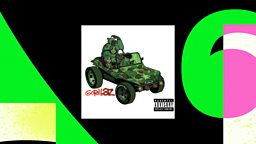
Damon Albarn was already a household name as the frontman of Blur, but his creative ambitions have always been wide and ranging - evidenced latter by his solo work, his various soundtracks, work with the Africa Express and supergroups like the Good, the Bad & the Queen. But outside of Blur, 2001 would see him also known for another great big pop behemoth in Gorillaz. The group saw him strike up a creative partnership with his flatmate, Jamie Hewlett - co-creator of cult comic series Tank Girl - which led to one of the most innovative and visually striking bands of the noughties.
It was a side-project with a twist though, that obviously being that the band's "members" themselves were all virtual. Albarn later explained the appeal of the cartoon group conceit to Q Magazine, saying: "It was a risk: Damon singing reggae... but [cartoon frontman] 2-D singing reggae is fine. He's not bad at it". He also told Q that the project was a way of experimenting with sounds that didn't suit his full-time band. "One of the reasons I began Gorillaz is I had a lot of rhythms I never thought I could use with Blur," he said.
Despite not everyone being convinced by the virtual band concept (Liam Gallagher once dismissed the whole thing as "music for 12-year-olds"), Gorillaz' 2001 self-titled debut was a huge cultural moment in British music - a hybrid of genres, its hazy, cinematic sound built from hip-hop, trip-hop grooves and driving bass lines. Fronted by virtual band members 2-D, Murdoc Niccals, Russel Hobbs and Noodle, the album debuted at No. 3 in the UK charts and went on to be certified triple platinum. It was, as later put it, a "game-changing album" and "founding text of pop liberation".
Aphex Twin - Drukqs
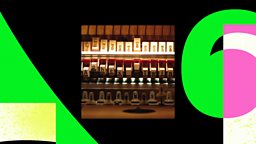
In October 2001, Aphex Twin - real name Richard D. James, now one of electronic music's most revered pioneers - hurriedly released the sprawling double album Drukqs. Spread across 30 tracks and nearly two hours, the record careens between hyperactive drill 'n' bass, jungle-inspired breakbeats and hushed, classical-leaning piano pieces.
James hadn't planned on releasing an album at all - it was only after he left an MP3 player containing over 180 unreleased tracks on a plane that he decided to rush-release 30 of them, hoping to get ahead of any potential leaks. Some criticised the record's unwieldy tracklist, but Drukqs was arguably a first of its kind: an album built for the digital and streaming era of music consumption. As he told Groove magazine in 2001: "It's kind of like an MP3 album really... the way I listen to music now is that I buy a CD, put it on the computer, and just take the tracks I want anyway".
The album contains some of Aphex Twin's most popular songs, among them the soft piano instrumental "Avril 14th", along with "QKThr" and "Jynweythek" - all of which have recently exploded in popularity thanks to their sustained viral use as TikTok sounds and in short-form video content. So much so that, in January 2026, Aphex Twin surpassed Taylor Swift in monthly YouTube Music listeners. recently described him as having become "the soundtrack to Gen Z life online".
Aaliyah - Aaliyah

Aaliyah's third and final studio album, with its striking red artwork, was released in July 2001 - just a month before her untimely death. Work on the record itself began back in 1998, and its writing process was staggered to fit in around the demands of the star's budding acting career. Aaliyah was already an R&B star in her own right at the time, having broken through with 1994's Age Ain't Nothing But A Number and cemented her place with 1996's One In A Million, but by this time, she was also starting to venture into movies too - having made her feature debut in Romeo Must Die in 2000. She found herself having to record many of the songs for her album at night, with her days busy due to the filming of horror flick Queen of the Damned.
Although the resulting album is predominantly R&B infused with neo-soul, it is forward-leaning too - with synthesisers and manipulated samples incorporated - perhaps reflective of the experimentation with futuristic sounds at the turn of the millennium. Surprising perhaps, but the singer had spoken of her love for Nine Inch Nails, which perhaps shows a more avant-garde direction that Aaliyah was headed at the time of her passing. Frontman Trent Reznor had been approached to collaborate back in 1999, but scheduling conflicts meant it never came to pass.
Tragically, Aaliyah and several crew members died on 25 August 2001, after filming a video in the Bahamas for single Rock the Boat. In the wake of her death, the self-titled album reached the top of the Billboard chart in the U.S. It's since been heralded as a defining influence on the trajectory of 00s R&B, paving the way for the likes of Rihanna, Ciara, SZA and countless others - Drake even has a tattoo of the late star on his back. Aaliyah's - and this album's - influence still echoes through modern pop today.
System Of A Down - Toxicity
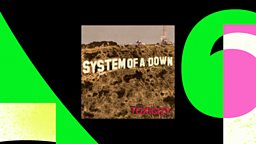
One of the boldest, arena-filling metal bands of the era, System Of A Down hit their stride in 2001. The Armenian-Californian band released their second album to widespread acclaim, debuting at No. 1 on the US chart. Produced by Rick Rubin - partly due to his work with the band's thrash heroes Slayer - the record abruptly flips genres and mashes influences. It sounded bigger than before too - as guitarist Daron Malakian : "On the last record, there were two tracks of guitars. On this record, there's 12 tracks on each song".
Across 15 songs, you get a taste of nu-metal, Armenian folk and jazz, searing vocal harmonies that soon plunge into yelling fury. The lyrics, too, are a highlight - political, socially aware, sometimes spiritual and occasionally absurd. Fittingly for an album of such high emotion, the launch had a dramatic start of its own: planned as a free gig in a car park, the event was cancelled by safety officers after the crowd swelled to around 10,000 fans, leading to hours of rioting and several arrests. Chaos aside, Toxicity remains a firm favourite among metal fans more than two decades on.
The Avalanches - Since I Left You
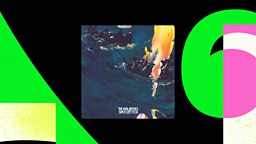
To say that a lot of work went into creating The Avalanches' seminal record Since I Left You is an understatement. The Melbourne outfit began working on the album in 1999, but had been recording together in various incarnations since forming as a noise-punk band in 1994.
They'd grown an affinity for experimenting with second-hand gear and diving into piles of old vinyl records, heavily influenced by the sample-based heritage of hip-hop. The record is said to have eventually drawn upon around 3,500 samples - a headache to clear legally but resulting in a singular, dizzying listen like no other. The band's Robbie Chater of the album's ethos: "You really have to listen to records in a whole different way. And while you're listening to a song, detach yourself from it and imagine what it could be".
Since I Left You blurs hip-hop, electronica, funk and psych elements, resulting in a record that saw its influence grow unexpectedly in the years after its release. It was , with the publication remarking: "Since I Left You isn’t just a well-built assemblage of sample-based plunderphonics, it’s a masterpiece of mood-setting".
The White Stripes - White Blood Cells
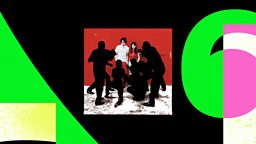
The White Stripes' debut had built an underground following in the UK after being championed by John Peel, who first spotted the album's artwork in a record shop and found his interest drawn purely by that. "I just liked the look of it," he recalled. "I looked at the titles - you develop an instinct... it looked like the sort of record I would like". Follow-up De Stijl won further praise from critics for being "feisty and clever, full of scuzzy garage rock". But it was 2001's third LP, White Blood Cells, that firmly cemented Jack and Meg White's place within the wider music public's consciousness.
This was their breakthrough album proper, going platinum in both the UK and US. It stands as another landmark record in igniting the early-noughties garage-rock revival, just one with a more bluesy twist. The pair - just guitarist and drummer - rehearsed for only a week before recording the entire record in three days in Memphis, with Jack White reportedly telling the engineer more than once "not to make it sound too good," keen to preserve the raw, tense energy the band would become known for.
Across singles like Dead Leaves and the Dirty Ground and fan favourite Hotel Yorba, the band channelled blues, punk and straight-up rock and roll into taut, urgent, attention-demanding songs. put it best in their review, noting that the pair "don't innovate rock; they embody it". The album's rise was helped along further by the now-iconic video for Fell in Love with a Girl, directed by Michel Gondry and animated entirely using LEGO bricks.
Jimmy Eat World - Bleed American
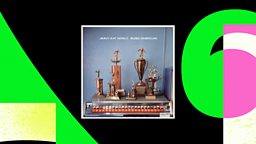
There's irony to the fact that Jimmy Eat World’s fourth album - their first since being dropped by their label Capitol - would go on to become perhaps their most successful and best-loved. Following Clarity two years earlier, 2001’s Bleed American (briefly reissued as self-titled in the wake of 9/11) found the Arizona band in career-best form, perhaps liberated by reduced industry pressure. “We had no illusions about how little that system gave… about bands like us,” frontman Jim Adkins would later . “We learned pretty quickly that the less you have to rely on outside assistance to do what you want to do, the better off you are.”
The result was a record that married a bigger, more anthemic alt-rock sound to a prevailing emo sentimentality - arriving just as the genre was beginning its push towards the mainstream. Drummer Zach Lind later told Rock Sound: “We’d gotten interested in people like Tom Petty and Bruce Springsteen - guys who wrote really great, big American rock songs.” You can hear it too: on singles like The Middle and Sweetness, two hugely anthemic tracks, the band reconfigured first-wave emo for the pop playbook, helping pave the way for the crossover acts that would soon follow.
Elbow - Asleep In The Back
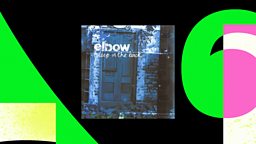
Elbow had already been together 11 years when they released their debut album in 2001 - having met as teenagers at Bury College and playing their first gig together in 1990. By the time Asleep In The Back finally saw the light of day, the band had already scrapped an entire album's worth of material after being dropped by their first major label.
It's a record that was written over six years - a time period that you can imagine the band maybe doubting whether the music they were working on would ever come out. But this record kickstarted everything - filled with cinematic soundscapes, built around Guy Garvey's hauntingly beautiful vocals and the band's orchestral melodies. It set them apart from their Greater Manchester contemporaries, earning them a Mercury Prize nomination and a place on Q magazine's list of the best albums of 2001.
The title track, a late addition to the tracklist, went on to become the band's first top 20 hit. marked the record's release by declaring "Manchester has delivered its first great album of the millennium", and : "The record was specifically written as an album for the millennium hangover. I predicted that people would be disappointed in general about the first years of the new century."
Missy Elliot - Miss E... So Addictive
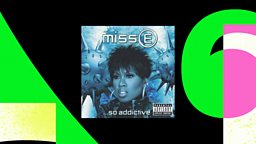
Missy Elliott's run in the late '90s and early 2000s remains one of modern music's finest, and on her third album she was perhaps at the very height of her powers. Following seminal debut Supa Dupa Fly and its follow-up Da Real World, the Virginia native teamed up once again with producer Timbaland to craft a record that expanded her sound while retaining the ferocity, energy and allure she had always commanded.
"People not gon' really know what to categorise this album," she said at the time. "It's an album for everybody." Blending hip-hop, R&B, dancehall, funk and electroclash with more unexpected textures - flutes, orchestral horns and the Bhangra dhol beat that drives iconic lead single Get Ur Freak On - it was unlike anything else on the radio. called it "an album that sets its own agenda and sounds like nothing else in hip-hop", and it still stands not only as one of the finest records of 2001 but as an all-time classic in its own right.
Muse - Origin of Symmetry
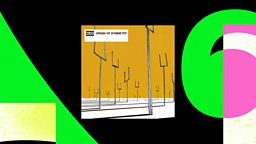
Origin of Symmetry was the album that started Muse's story, setting them on the path to becoming the juggernaut they are today. Reception to 1999 debut Showbiz had been positive but not universal, and in some quarters they were dismissed as - as NME's would put it - "just Radiohead with a Freddie Mercury complex". Their 2001 follow-up proved they were destined to be far more than that, trading in grander ideas and bigger sounds than any simple alt-rock pastiche could hold.
Reflecting later, frontman Matt Bellamy said the ambition had been "to show the side of the band that had not been seen so far... the more progressive elements, the harder rock elements... the slightly more eccentric elements". They delivered precisely that. at the time praised the band's "reinvention of grunge as a neo-classical, high gothic, future rock, full of flambéd pianolas and white-knuckle electric camp", picking out "the ultra-vivid tones of Muse's palette - purity, insanity, corruption, virtual consciousness, Bach, metal and barking madness". The album's strength has endured even as Muse's sound expanded and diverged - fittingly, they even played Origin... in full at Reading and Leeds in 2011 to mark its 10th anniversary.
-
![]()
6 Music Indie Forever: Listen Live
The biggest and best indie pop, rock and classic tunes 24/7.
Ash - Free All Angels
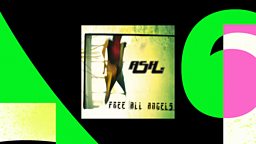
After the disappointing reception of 1998's Nu-Clear Sounds, Ash frontman Tim Wheeler fell into an 18-month depression, moving back in with his parents back in Northern Ireland and forcing himself to write a song a day just to escape the writer's block he’d been feeling. This self-imposed exercise paid off in a major way - a whopping 50 songs were written for what became Free All Angels, its title borrowed from a t-shirt spotted on a Hells Angels member while the band were on tour.
But as they moved to record the album, self-funding the sessions themselves, the band came close to bankruptcy, at one point down to their last £1,000. It was worth the risk though: praised the record's "swirling strings" and the "muscle behind its melodies", while the band also embraced new technology in the process, recording with Pro Tools and even uploading the album to Napster themselves - something they've since said only helped drive its promotion and success. The album’s big single, Burn, Baby Burn, is also among not only the most irresistible tunes of the band’s back-catalogue but of the whole era too.
Radiohead - Amnesiac
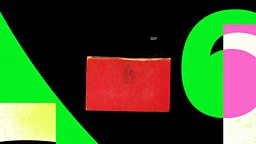
Fresh from confounding expectations with 2000's Kid A, Radiohead returned just eight months later with Amnesiac, a parallel album born from the same recording sessions but possessing a character all of its own. Where its predecessor could feel coldly clinical, Amnesiac thaws slightly, its eerie soundscapes shot through with brass, strings and a flicker of warmth. Most strikingly on lead single Pyramid Song, described by the band at the time as "the best song we’ve ever made", and inspired by an exhibition of Egyptian underworld art Thom Yorke had seen while recording in Copenhagen.
Stanley Donwood, the designer of the band's graphics, the album: "Kid A is like, you pick up the phone, you call somebody, and there’s an answering machine on the other end. With Amnesiac, you get through to that person. And you’re engaged in the conversation". The album closes with Life in a Glasshouse, a smoky, mournful New Orleans jazz collaboration with renowned jazz trumpeter Humphrey Lyttelton.
While the title plays with the idea of being the "forgotten record", this was not simply the offcuts from the previous album’s sessions, in fact originally Amnesiac was intended to ship with Kid A as a double album, but the band were concerned it would be too dense and mean the tracks get "skipped over". This theme of being forgotten continued into the album’s marketing, with the special edition made to resemble a tattered, hand-bound book rediscovered in an attic, an idea that went on to win the Grammy for Best Recording Package.
Weezer - Weezer (Green Album)
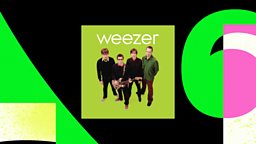
After 1996 album Pinkerton was met with an underwhelming response, Weezer pretty much thought they were done. Frontman Rivers Cuomo famously retreated from the spotlight, even reportedly going as far as to black-out his apartment windows, as the rest of the band went on to pursue side-projects. But in the few years that followed, Pinkerton had began to grow a cult following.
Then after new bassist Mikey Welsh joined the group, they decided to start working on a new record again. 2001’s self-titled album - labelled the Green Album due to its front cover colour - was billed as a "back-to-basics" affair, with Cuomo pivoting to simpler songwriting, more direct hooks and punchy power-pop. The album was again met with mixed feelings from the band's famously hard-to-please fanbase, but like Pinkerton, would eventually be remembered fondly by most. The album debuted at No. 4 in the US chart and would eventually go platinum. It gave us some of Weezer's most beloved singles, too, namely Island in the Sun and Hash Pipe.
Listen to more:
-
![]()
6 Music Artist Collection: The Strokes
Live sessions, classic interviews and more from The Strokes' archive.
-
![]()
6 Music's Deep Dive into The Strokes' Is This It
Celebrating the American rock band on the 25th anniversary of their debut album, Is This It.
-
![]()
6 Music Artist Collection
Exploring the influences of classic artists and looking T those they have in turn inspired.